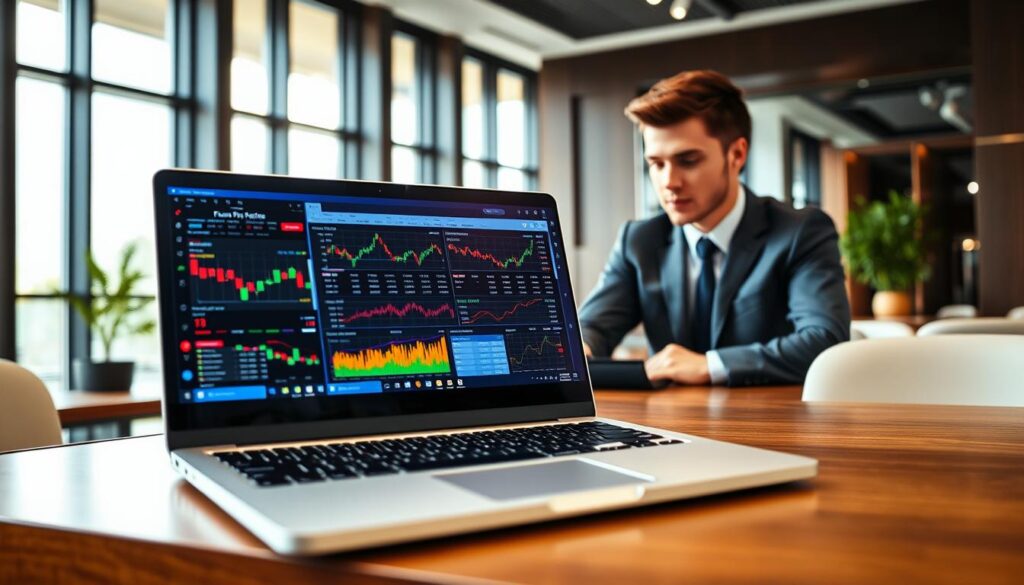
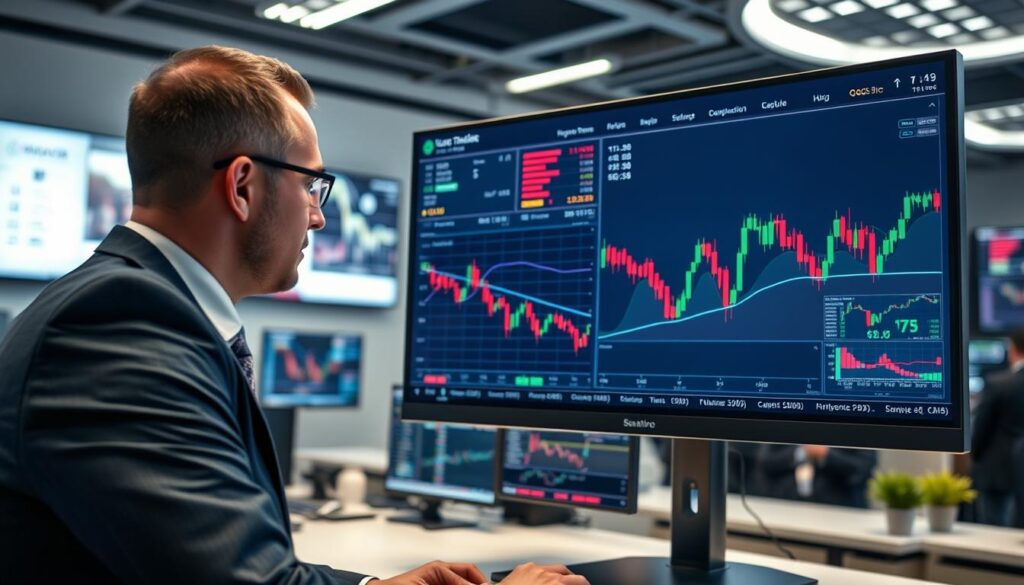
Many people want to learn how markets work. They want to build skills without losing their own money. This is where paper trading comes in.
It is a virtual platform that uses live market data. Users can buy and sell contracts just like professionals do. The big difference is that no real capital is at risk.
Industry statistics show a tough reality. About 90% of newcomers lose funds in their first year. A safe practice environment is crucial for long-term success.
Platforms like NinjaTrader and TradingView provide these tools. They let you test different strategies with real-time information. You build necessary confidence before using your own cash.
This method helps you understand order execution and slippage. You learn how positions can move quickly. Your money stays secure while you gain experience.
Companies like Goat Funded Trader use this model. They evaluate performance in a simulated setting. Strong results can lead to access to funded accounts.
This article explores how these platforms work. You will learn to manage margin and refine your approach. The goal is to bridge the gap between practice and professional success.
What is Simulated Futures Trading?
Imagine practicing with real-time data without the fear of losing your savings. This is the essence of paper trading, a virtual environment that mirrors live market conditions.
Definition and Key Concepts
A user opens a virtual account loaded with pretend funds. They can execute orders on actual contracts like the E-mini S&P 500. The platform replicates real execution, fills, and margin calls.
This practice teaches contract specifications and leverage. It removes financial cost while building necessary discipline.
Benefits for Beginners and Experienced Traders
Industry data shows about 90% of newcomers lose funds in their first year. A simulator serves as a vital, risk-free tool for them to learn safely.
Experienced individuals also use it to test new strategies. They refine their approach in a consequence-free setting before live application.
Key advantages include:
- Understanding position sizing and stop placement
- Observing how quick price moves affect an account balance
- Developing a routine without monetary pressure
- Tracking performance metrics to improve
This method bridges the gap between knowledge and professional execution.
The Mechanics Behind Virtual Trading Platforms

To be effective, a practice tool must replicate the real-world pressures and processes of the financial arena. It does this through a sophisticated engine that powers the entire experience.
Real-Time Data and Order Execution
Professional simulators rely on live exchange data, often sourced directly from the CME Group. When a user places an order, the system processes it against this real-time information.
It checks current liquidity and simulates queue priority. This determines how your fill is executed based on available market depth. Your virtual account then updates instantly with the new position and margin requirement.
Simulating Market Conditions and Slippage
Advanced platforms go further by replicating slippage and partial fills. This reflects what happens during volatile sessions or illiquid hours.
Understanding this prevents the false expectation of perfect fills at your limit price. It teaches you how actual execution functions under pressure.
The core mechanical components include:
- Processing orders against live or replayed market data
- Simulating queue priority and liquidity checks
- Replicating realistic slippage and partial order fills
- Providing instant account updates for positions and P&L
This detailed simulation builds the skills needed to handle real-world challenges. It turns simple clicks into a genuine learning experience for the markets.
Risk Management in a Simulated Environment

The core discipline that separates amateurs from professionals isn’t just analysis—it’s how they protect their capital. A virtual platform provides the ideal space to build these defensive skills. You can experiment with protective measures without any real financial consequences.
Managing Margin Requirements
Understanding margin is a fundamental skill. In a simulator, you learn how each tick of price movement translates into potential dollar risk. You see firsthand how quickly a margin call can be triggered when a position moves against you.
This practice teaches you to respect leverage. It forces you to calculate position size based on your account balance. The goal is to avoid a single bad move from wiping out your virtual funds.
Realistic Order Fills and Stop Placement
Where you place your protective stop is a critical decision. A good simulator replicates realistic order fills, including slippage. This prevents the false security of always getting a perfect fill at your chosen price.
By reviewing your performance metrics, you can see if your stops are consistently hit just before the market reverses in your favor. This data allows you to adjust your buffer and improve your risk-reward ratio. The ability to tweak and test these settings is a powerful advantage of the practice environment.
Treating virtual capital with the same seriousness as real money builds essential patience. It trains you to avoid the impulsive decisions that often destroy live accounts.
Exploring Advanced Order Types for Futures Trading
Moving beyond basic buy and sell commands unlocks a new level of market control. Modern platforms offer specialized tools that automate complex decisions and manage exposure.
These features allow you to execute detailed plans with precision. They are essential for anyone looking to operate systematically.
ATM Strategies and OCO Orders
An ATM (Automated Trade Management) strategy bundles entry, profit target, and stop-loss orders into a single action. This automates your entire plan upon entry.
An OCO (One Cancels the Other) order links two pending orders. If one is filled, the other cancels automatically. This is crucial for managing risk around key price levels.
Platforms like NinjaTrader provide a robust environment to practice these setups. You learn to set them up quickly, reducing hesitation during fast-moving sessions.
Leveraging Advanced Charting Tools
Sophisticated charting software turns raw price data into actionable insights. You can apply multiple technical indicators to analyze trends and momentum.
These tools help visualize price action and identify patterns. You can backtest specific setups, like opening-range breakouts, across hundreds of examples.
This process measures your strategy’s performance without financial trial and error. It builds deep familiarity with the platform’s interface before you commit real capital.
User-Friendly Interfaces and Platform Compatibility
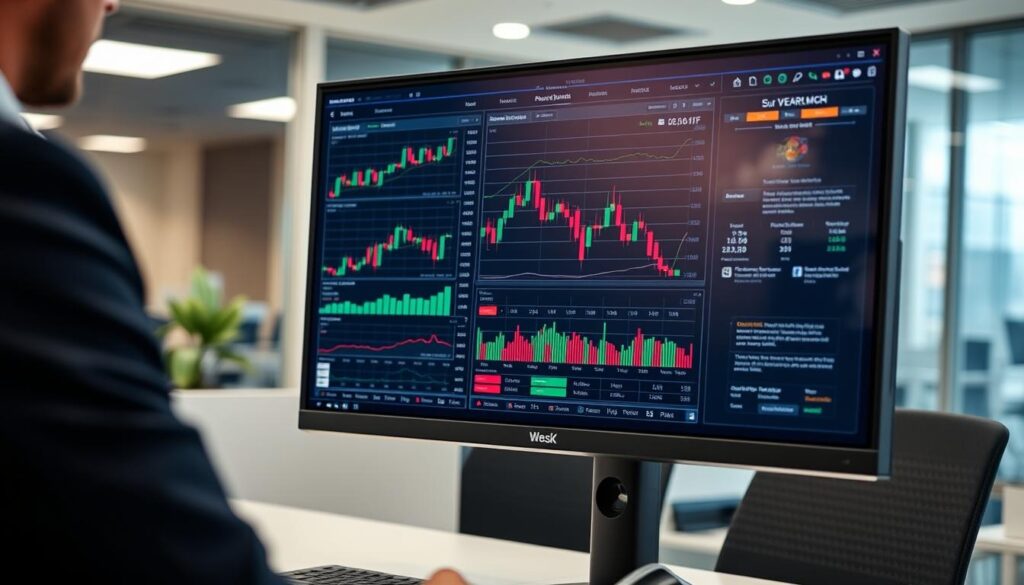
The best learning tools feel intuitive, allowing the user to concentrate on strategy rather than software navigation. A clean, well-organized interface significantly reduces the initial learning curve. This lets newcomers focus on understanding price action and market dynamics from day one.
Intuitive Design Elements
Modern software uses logical layouts and clear visual cues. Key functions like placing an order or setting a stop-loss are easy to find. This design helps you monitor multiple contracts and asset classes without confusion.
You build muscle memory faster in a streamlined environment. This leads to quicker, more confident reactions when real-time opportunities arise. Efficient tools support better decision-making and performance tracking.
Cross-Platform and Device Access
Platform compatibility is essential for a flexible routine. Many leading tools, like Tradovate, are cloud-based. This provides seamless access from any desktop, tablet, or mobile device with an internet connection.
Your workspace and account data remain consistent everywhere. You can check positions or manage orders whether you’re at a desk or on the go. This reliability ensures you never miss a critical update from the markets.
Simulated Trading vs Live Trading: Bridging the Psychological Gap

A significant psychological chasm exists between operating in a risk-free setting and engaging with actual financial stakes. Flawless execution with virtual capital does not guarantee success when real money is involved. This gap is where many aspiring professionals falter.
Emotional Discipline in Simulation
To bridge this divide, one must treat every virtual trade with the seriousness of a live account. This means setting strict rules for risk per trade and daily loss limits during the practice phase. The goal is to build automatic, disciplined habits.
Emotional factors like fear or greed often remain hidden when the capital is not yours. This can lead to dangerous overconfidence. A robust simulator allows you to confront these mental challenges in a safe environment.
Transitioning from Virtual to Real Money Trading
The moment real money enters the equation, pressure intensifies. Statistics show that many traders lose funds due to emotional breakdowns, not flawed strategies. The disciplined routines built in simulation must become second nature.
Start with a very small real money line when you transition. This minimizes financial fear while allowing you to experience the psychological weight of live trading. The habits of patience and rule-following you developed are your greatest assets.
Paper Trading and Its Educational Value
Educational platforms provide a safe space to make mistakes and learn from them without financial penalty. This foundational step is where theoretical knowledge transforms into practical skill. It allows you to explore the market with real-time data but with virtual capital.
Building Confidence Through Risk-Free Practice
Repetition is the key to building muscle memory. You can execute the same setup repeatedly until your actions feel automatic. This process develops the confidence needed for live sessions.
A risk-free environment lets you spot personal weaknesses. You might notice hesitation, overtrading, or a tendency to chase losses. Identifying these patterns early is a major educational benefit.
Learning the Mechanics Without Financial Risk
Understanding contract specifications, margin rules, and advanced order types is complex. Doing so without financial risk to your capital is invaluable. The CME Group offers a free simulator focused on this exact education.
You learn about tick sizes and contract multipliers in a consequence-free setting. Mastering these mechanics is essential before committing real money. This approach turns potential financial ruin into pure, actionable learning.
Evaluating Trading Simulators: Metrics and Performance Analytics

The true value of a practice platform lies not in its graphics, but in the depth of its performance analytics. Detailed metrics are what separate educational tools from mere entertainment. They provide the objective feedback needed for real improvement.
Tracking Win Rates and Profit Factors
Win rate alone can be misleading. A high percentage of winning trades means little if the losses are much larger. The profit factor (gross profit divided by gross loss) is a more telling metric.
It reveals if your overall approach has a genuine edge. Consistent data here across many executions indicates a strategy that may hold up in different market conditions.
Understanding Maximum Drawdown and Trade Statistics
Maximum drawdown measures the largest peak-to-trough decline in your virtual account. It shows the worst historical loss your approach has endured.
This metric teaches respect for risk and capital preservation. Other vital statistics include average win versus average loss and streaks of consecutive losers.
Reviewing this objective data helps identify hidden patterns. You might see stops placed too tight or poor position sizing.
Key metrics to look for in your reports include:
- Maximum Drawdown
- Profit Factor
- Average Win vs. Average Loss
- Consecutive Losing Trades
Analyzing these numbers turns gut feel into an iterative process. It ensures your method is robust before risking real capital.
The Role of Prop Firms in Funding Simulated Trading
Proprietary trading firms have transformed simulated practice from a mere learning tool into a critical audition for managing real firm capital. This sector has grown rapidly, with the global market estimated at $6.7 billion in 2020. It creates a direct pathway from skill development to professional funding.
Evaluation Models and Performance Requirements
Firms like Goat Funded Trader set clear rules. They evaluate your performance in a simulated environment under strict risk parameters. The goal is to demonstrate consistency and discipline without blowing up a virtual account.
This structured evaluation acts as a filter. It identifies individuals who can follow a strategy and manage drawdowns effectively. Success here is based on objective data and metrics.
Transitioning to Funded Accounts
Passing the evaluation unlocks a funded account. Traders can then manage significant capital, often up to $2 million. This model removes the need for personal savings.
Your performance with the firm’s capital generates real payouts. Profit splits, sometimes 100%, turn disciplined trading into actual income. It bridges the gap between practice and professional access.
Top Tools for Simulated Futures Trading
Your choice of a virtual platform determines whether you build genuine proficiency or just click buttons. The right software shapes your entire learning journey.
Leading tools offer unique strengths for different styles. Comparing them helps you find the best fit for your goals.
Highlighted Features of Leading Platforms
NinjaTrader is a top pick for serious market participants. It provides a highly realistic environment with advanced order types and market replay for historical data.
TradingView integrates directly into its world-class charts. Users can test community-shared scripts and indicators easily.
Thinkorswim by Charles Schwab offers institutional-grade charts. It is excellent for those who want to mix asset classes and practice options.
Tradovate is a commission-free broker with a built-in simulator. This makes it very accessible for beginners to start their practice.
Comparing Order Types and Advanced Charting Options
These platforms differ in their advanced capabilities. NinjaTrader excels with complex automated strategies.
TradingView and Thinkorswim shine with deep charting tools and technical analysis. Tradovate focuses on streamlined execution.
Running the same strategy across multiple simulators is insightful. You can identify which one provides the most accurate fills.
This comparison ensures you select the right platform for your specific needs. It turns your virtual practice into real skills.
Building and Testing Futures Trading Strategies
Building a lasting edge in the markets is an iterative process, powered by data and disciplined analysis. The best approaches are not born from guesswork but from systematic validation.
This involves using specialized features to stress-test ideas before live execution. It turns theoretical plans into robust methods.
Backtesting and Market Replay Features
Platforms like NinjaTrader offer a high-performance backtesting engine. You can simulate automated strategies on years of historical data.
This reveals how your plan would have performed in past market conditions. It provides objective metrics beyond gut feeling.
Market replay is another powerful tool. It lets you play, pause, and rewind price action tick by tick.
You can practice the same volatile day repeatedly. Test different entry points or stop placements until the results make sense.
Key features of these tools include:
- Simulating strategies across decades of historical data
- Fully synchronized replay for realistic practice
- Ability to test adjustments without financial consequence
Iterating on Strategies Through Data Analysis
Data analysis reveals the true expectancy of your approach. You see if it holds up in trending, choppy, or low-liquidity sessions.
This level of control does not exist in live markets. Mistakes there are final and can compound quickly.
By iterating based on performance reports, you refine your edge. Many professionals continue using a simulator alongside funded accounts.
They test new ideas or regain rhythm after tough periods. This disciplined practice bridges the gap between a good concept and consistent execution.
Latest Trends and Innovations in Trading Simulation
The next generation of market preparation is here, blending artificial intelligence with deeper analytical insights. These changes are making virtual practice more powerful and relevant than ever.
Modern software is no longer just a basic replay tool. It is becoming an intelligent partner in skill development.
Integration of AI Tools and Enhanced Analytics
Many platforms now incorporate AI-driven analysis. This technology helps users spot potential setups and improve their decision-making in real time.
Enhanced analytics provide deeper insights into performance. Traders can understand their habits and weaknesses with greater clarity.
Regulatory Changes and Market Adaptations
New rules are shaping the practice landscape. Leverage requirements are tightening, especially heading into 2025.
This makes practicing disciplined risk management in a simulator more crucial. The rise of Micro E-mini contracts offers new flexibility.
You can test position sizing with these smaller instruments endlessly. This helps avoid overexposure when you transition to live markets.
Regulations also demand more transparency from platforms. Users get clearer data on the true cost of their trades during practice sessions.
Innovations now allow seamless integration across various asset classes. You can practice on energy, metals, and indices within one environment.
Key trends shaping modern simulators include:
- AI assistance for identifying trading opportunities
- Stricter leverage rules emphasizing risk practice
- Micro contracts for precise position sizing tests
- Cross-asset compatibility in a single platform
- Transparent reporting on trade execution costs
These advancements are transforming virtual platforms. They are evolving from simple practice tools into sophisticated environments for professional development.
Staying updated ensures your training remains effective in a dynamic financial world.
Practical Tips for Maximizing Your Simulation Experience
Maximizing the value of your virtual sessions requires a structured and disciplined approach. This turns casual clicking into genuine skill development for the financial markets.
Establishing a Consistent Trading Routine
Treat your virtual account like a real, full-time operation. Journal every single trade, noting your entry rationale and exit.
Review these logs and your performance stats at the week’s end. This process identifies weak spots in your execution or strategy.
Maintaining Discipline in a Virtual Environment
The temptation to deviate from your plan is strong when no real money is at stake. Resist the urge to try random ideas out of boredom.
Sticking to predefined rules builds the professional mindset you need. The goal is to make disciplined action automatic.
A sloppy practice habit almost guarantees poor results later. Use this environment to build robust habits, not as a sandbox for gambling.
Simulated Futures Trading: A Gateway to Real Market Success
Think of your virtual account not as a game, but as a professional audition for managing real capital. This method lets you prove your skills and strategy long before you risk your own savings.
The knowledge, habits, and emotional control you develop here become the unshakable foundation for earning from the markets. Consistent performance in this safe environment is what firms look for.
Success in a simulator does not guarantee success with real money. However, it is the necessary step to prepare for the intense pressure of live trading. You learn to execute orders under realistic conditions.
You are performing under observation, with actual profit potential. The traders who succeed treat every practice session as preparation for that reality. This discipline bridges the gap between virtual gains and a sustainable career.
Final Insights and Next Steps for Aspiring Futures Traders
The path to managing real capital begins with demonstrating skill and consistency in a controlled setting. Selecting the right platform is crucial, as no single simulator fits all styles. Try at least two side by side to see which matches your approach.
Remember, performance in virtual accounts is not a guarantee for live trading outcomes. Fewer than 1% of participants progress to a live-capital stage. Always conduct your own research and treat programs as a learning experience.
If you can stick to your rules in practice mode, you are already ahead. This discipline builds the foundation for handling real market pressures and risk management. Your next step is to select a challenge account and begin proving your consistency to a prop firm.
By matching the tool to your strategy, you create a solid base for your entire career. The journey from practice to professional access requires patience and proven skill.
Related Simulator Articles