Entering the world of finance can be daunting, especially for beginners. The complexities of the market often lead to significant losses, with many new participants losing their initial capital within just 90 days. This is where a futures trading game can be invaluable. It provides a sophisticated entry point for those looking to understand the financial landscape without risking real money right away.
Utilizing a professional trading platform allows users to gain essential experience. They can navigate the volatile nature of the market in a simulated environment, preparing them for future challenges. This guide will explore how a structured approach to a trading simulator can bridge the gap between theoretical knowledge and practical application.
Understanding market mechanics is crucial. The high leverage associated with futures can lead to rapid financial depletion if not managed properly. By engaging with simulation tools, traders can enhance their skills and confidence before committing their own capital.
Understanding the Role of Simulation Tools in Futures Trading
For many, the finance sector appears intimidating, particularly for those just starting out. Simulation tools play a crucial role in easing this transition. A futures trading simulator allows users to engage with market dynamics without the fear of losing real money.
These simulators act as a software bridge, replicating the workings of major exchanges like the CME and NYMEX. They provide an electronic environment that mimics real-time market conditions, unlike traditional paper trading, which involved manual order logging.
Modern simulators allow users to test various order types and margin requirements. This ensures that they grasp the technical aspects of trading before stepping into a live market. By practicing strategies in a risk-free environment, traders can build confidence and enhance their skills.
Exploring the “Futures Trading Game” for Skill Development

For newcomers, the financial landscape often appears complex and challenging. Engaging with a futures trading simulator can provide essential insights and skills without the risks associated with real capital. This risk-free environment allows traders to learn and make mistakes, crucial for building confidence.
Utilizing modern simulation tools offers various advantages:
- Spending 50 to 100 hours on focused replay practice can equate to gaining 6 to 12 months of real-time screen experience for recognizing patterns.
- Market Replay features enable users to access historical tick-by-tick data, allowing them to compress weeks of practice into a single session.
- A risk-free environment is vital, as it lets traders experiment without the stress of losing actual money.
- With a futures trading simulator, individuals can test their strategies against historical data, offering a stronger foundation than solely relying on live market conditions.
- The ability to pause, rewind, and fast-forward through historical sessions helps traders master specific setups at their own pace.
Essential Features to Look for in a Futures Trading Simulator
Navigating the financial landscape can be a challenging endeavor for those who are just starting out. Selecting the right futures trading simulator is crucial for effective practice. A high-quality simulator should incorporate realistic order execution and fill logic.
It is essential to ensure that the simulator supports micro futures contracts like the MES and MNQ. This feature allows traders to practice with realistic risk control.
Advanced charting tools are another vital component. Platforms like NinjaTrader offer over 100 technical indicators that help analyze market depth and price action.
Moreover, understanding specific contract specifications, such as the $12.50 tick value for the E-mini S&P 500, is crucial for accurate profit and loss calculations. Traders should also seek platforms that support complex order types, including OCO and ATM strategies, to mirror professional trading environments.
How Simulation Tools Build Confidence and Discipline
The financial landscape can feel like a maze for those new to it. Engaging with a simulator allows traders to navigate this complexity in a safe environment. It is crucial for developing both confidence and discipline.
Establishing a consistent trading routine within a simulator is essential. This practice helps traders adhere to their rules, even during moments of boredom or temptation. While simulators cannot replicate the panic of losing real money, they provide a valuable space for emotional regulation.
By treating the simulator as a professional workspace, traders can refine their skills and prepare for the pressures of a live market. The psychological gap between simulation and reality is significant. However, consistent practice helps train the brain to respect risk parameters and avoid impulsive decisions.
- Developing the habit of journaling every trade, even in a simulator, fosters accountability.
- This practice ensures that traders learn from every session, enhancing their overall trading acumen.
- It is vital to recognize that each simulation session contributes to their long-term success.
Comparing Replay-Based and Live-Paper Simulation Engines

The financial world can present a labyrinth of challenges for beginners. To navigate these complexities, understanding the differences between simulation engines is crucial. There are two main types: replay-based and live-paper engines.
Replay-based engines allow for the playback of historical tick data. This feature is ideal for drilling specific market events, such as FOMC announcements or earnings reports. In contrast, live-paper engines connect to real-time market data, providing a realistic feel for order execution and latency that replay engines cannot fully replicate.
However, live-paper engines come with drawbacks. Traders are bound by the current market pace, which can slow down skill development. On the other hand, replay engines offer the advantage of compressed learning. Users can practice years of trading data in a single weekend without waiting for the market to open.
Professional traders often cycle between both engine types. They use replay for deliberate practice and live-paper for testing their systems in current market conditions.
Practical Drills for Effective Futures Trading Practice
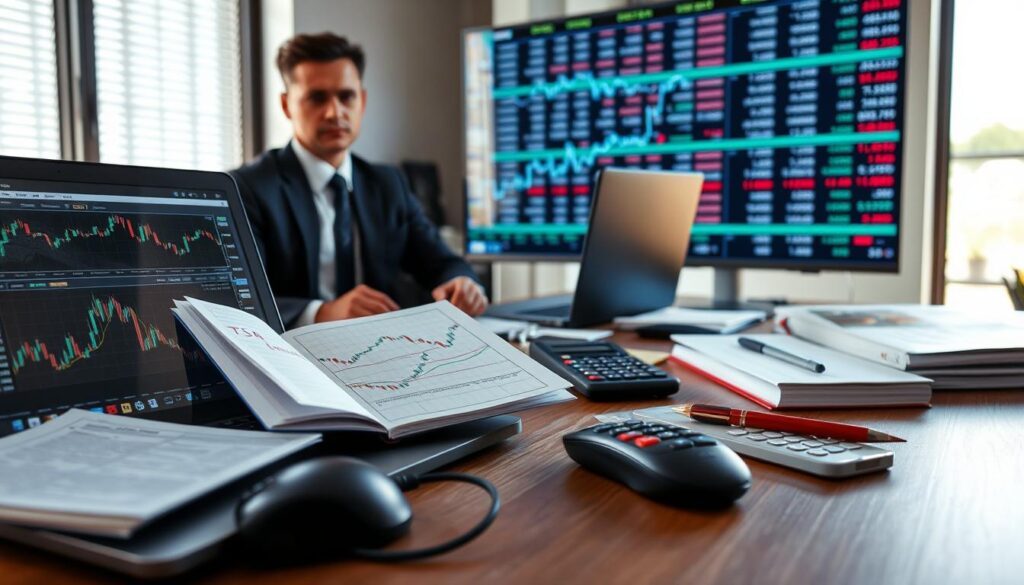
The world of finance can present significant hurdles for those just beginning. Engaging in practical drills can significantly enhance trading skills and confidence. These drills provide hands-on experience that is crucial for mastering various strategies.
The Opening Range Breakout and Trend Pullback Techniques
One effective drill is the Opening Range Breakout (ORB). This technique involves identifying the high and low of the first 15 minutes of the market open. It helps traders capture potential momentum moves.
Another valuable method is the trend pullback technique. This involves waiting for the price to touch the 20-period moving average. It encourages disciplined entry and proper stop-loss placement.
Disaster Day Management for Volatile Market Conditions
Traders can also benefit from disaster day management drills. By replaying historical market crashes, such as the March 2020 volatility, they learn how to navigate extreme conditions.
Running these drills in a simulator teaches that sometimes the best trade is no trade, especially when market conditions are unpredictable. Consistent repetition of these setups builds the muscle memory needed to execute strategies effectively when the market moves rapidly.
Integrating Advanced Simulation Tools and Real Market Data

For those venturing into finance, the complexity of the market can often be overwhelming. To effectively navigate this landscape, integrating advanced simulation tools with real market data is essential.
Using built-in journaling tools allows traders to automatically capture entry and exit points. This feature is crucial for reviewing performance metrics on a weekly basis. It helps traders identify patterns and areas for improvement.
Moreover, real market data streams provide the necessary precision for testing automated strategies. This ensures that the simulator reflects the actual behavior of the market.
Advanced analytics within a simulator can track win rates and drawdown. This quantitative feedback is vital for refining a trading strategy over time.
Additionally, using a platform that captures chart screenshots alongside notes helps traders visualize their decision-making process. This practice can reveal recurring patterns in their trading.
The combination of high-quality market data and robust analytical tools is what separates a serious simulator from a basic demo account.
Strategies for In-Depth Backtesting and Performance Analysis

For those entering the finance sector, the complexities can often feel overwhelming. However, implementing a structured approach can significantly enhance a trader’s skill set. A well-defined plan helps in transitioning from understanding patterns to executing strategies effectively.
A 90-day structured practice plan is recommended. This plan allows traders to move from pattern recognition to execution and advanced risk management techniques. By backtesting a strategy against historical tick data, they can verify its effectiveness across various market conditions.
Setting Up a Structured Trading Strategy
To set up a successful strategy, it is crucial to define entry rules, exit logic, and risk parameters before testing them in the simulator. This structured approach provides clarity and direction.
Evaluating Performance Metrics and Risk Factors
Evaluating performance metrics, such as the profit factor, is essential. Ideally, this should be greater than 1.5, indicating a positive expectancy. Analyzing risk factors, like maximum drawdown, ensures the strategy’s sustainability before risking capital in a live account.
Transitioning from Simulation to Live Futures Trading
Embarking on a financial journey can be overwhelming, especially for those new to the field. Transitioning from a simulator to a live account should be a gradual process. Starting with micro contracts like the MES allows traders to maintain risk levels similar to their simulation practice.
One significant advantage of futures trading is that the Pattern Day Trader rule does not apply. This means traders can execute as many trades as their strategy requires without restrictions. Many successful traders recommend achieving consistent profitability in the simulator for at least 90 days before moving to a live account.
Utilizing micro contracts enables better position sizing, helping traders manage their risk effectively as they scale up their live trading activities. The ultimate goal of this transition is to maintain the same discipline and performance metrics in the live market that were established during the simulation phase.
Leveraging Simulator Insights to Optimize Your Trading Strategy
For those new to finance, the intricacies of the market can seem overwhelming. However, leveraging insights from a simulator can significantly enhance a trader’s strategy. By analyzing simulator data, traders can identify which market conditions favor specific setups and which lead to losses.
One key advantage is the tax efficiency provided by Section 1256. This regulation allows for a 60/40 capital gains treatment, improving net performance in the futures market. Continuous refinement of a strategy based on simulator insights enables traders to adapt to shifting market conditions, ensuring they maintain a competitive edge.
Moreover, testing a strategy across different simulators can reveal potential flaws that may not be evident when using a single platform. A well-optimized strategy should be robust enough to handle various market data scenarios, ultimately helping traders remain profitable over the long term.
Final Thoughts on Mastering Futures Trading Through Simulation
The financial landscape can be a daunting place for those just beginning their journey. Mastering the art of trading requires the right tools, consistent practice, and a deep understanding of market dynamics.
Simulation tools provide essential flight hours for traders to build their skills and confidence before facing the turbulence of the live market. By treating the simulator as a serious professional environment, individuals can cultivate the discipline and habits that lead to long-term success.
Transitioning from simulation to live trading is a significant milestone. This process should be approached with caution, patience, and a proven, data-backed strategy. Ultimately, the time spent in a simulator is an investment in one’s future, equipping traders with the experience needed to navigate the complexities of the financial world.
Related Simulator Articles