Starting in the financial markets can feel overwhelming. A demo account offers a powerful solution. It lets people practice with virtual money. This means they can learn the ropes without any financial risk.
Platforms like Kraken Pro provide vital educational tools. These include videos and webinars. They help new participants understand complex market dynamics. This knowledge is the first step toward confident participation.
These contracts allow access to asset price movements. You don’t need to own the actual commodity. A simulated environment is perfect for testing entry and exit logic. It mirrors real-world volatility safely.
Mastering the basics in a risk-free setting is crucial. It builds discipline for live sessions. Success requires time, patience, and applying technical analysis tools. A consistent approach is developed through this dedicated practice.
Overview of Futures Trading and Demo Accounts
A solid foundation in market participation is built upon two key pillars: the instruments and the practice environment.
What Are Futures Contracts?
These are standardized financial derivatives. They obligate the buyer to purchase an asset at a set price on a fixed future date. According to the CME Group, these instruments let market participants speculate on the price direction of commodities, indices, and currencies.
You agree to a future transaction without owning the asset now. This setup allows for exposure to significant market moves.
How Demo Accounts Support Learning
These simulated platforms provide a vital, risk-free educational tool. Users get virtual currency to practice with. They can familiarize themselves with a platform’s interface and various order types.
People observe how the market reacts to news events. There is no pressure of losing real money. The primary goal is to build confidence and competence before using real capital.
Many professional platforms offer these environments. Consistent practice here helps identify the strengths and weaknesses of a chosen approach. It ensures users understand the inherent risks involved.
The Benefits of Testing With a Demo Account

One of the most powerful advantages a new participant has is the ability to test ideas without financial risk. A simulated platform turns theory into practical experience. It builds the confidence needed for live sessions.
Risk-Free Skill Refinement
This environment is perfect for honing critical skills. People can practice setting stop-loss orders and profit targets. They see how these tools perform during high volatility.
Key techniques to master here include:
- Implementing complex risk management plans.
- Developing the emotional discipline for market ups and downs.
- Learning from mistakes in a completely safe space.
Real-Time Market Simulation
Quality demo accounts stream live price data. This feed mirrors the action on major exchanges. Traders observe authentic patterns and trends as they develop.
They can test aggressive strategies that feel too risky for a beginner. This live practice helps verify technical analysis tools. It ensures a method works before using real capital.
Watching the market throughout the day teaches its rhythm. People learn to anticipate price moves and confirm the direction. This knowledge is invaluable for future success.
Understanding Futures Trading Fundamentals
Two defining features set this activity apart: the use of leverage and fixed expiration dates. Grasping these pillars is essential for anyone looking to participate. They form the bedrock of how the market operates.
Core Concepts
A core concept is the use of margin. This acts as a performance bond for the trader. It ensures they can cover potential losses on a position.
These contracts are derivatives. Their value comes from an underlying asset like crude oil. Participants can profit from both rising and falling prices.
The high liquidity allows for fast order execution. This is a major advantage. Beginners should learn about tick values and contract specifications first.
Differences from Other Trading Methods
Unlike stock trading, these agreements have set expiration dates. They are not held indefinitely. This creates a defined timeline for all market moves.
The leverage-based margin requirement is another key difference. It allows control of a large contract value with a smaller deposit. This amplifies both gains and risks.
These are standardized contracts traded on exchanges. This differs from private forward agreements. Regulatory bodies like the CFTC oversee the market for fairness.
Proven futures trading strategies for Demo Account Mastery
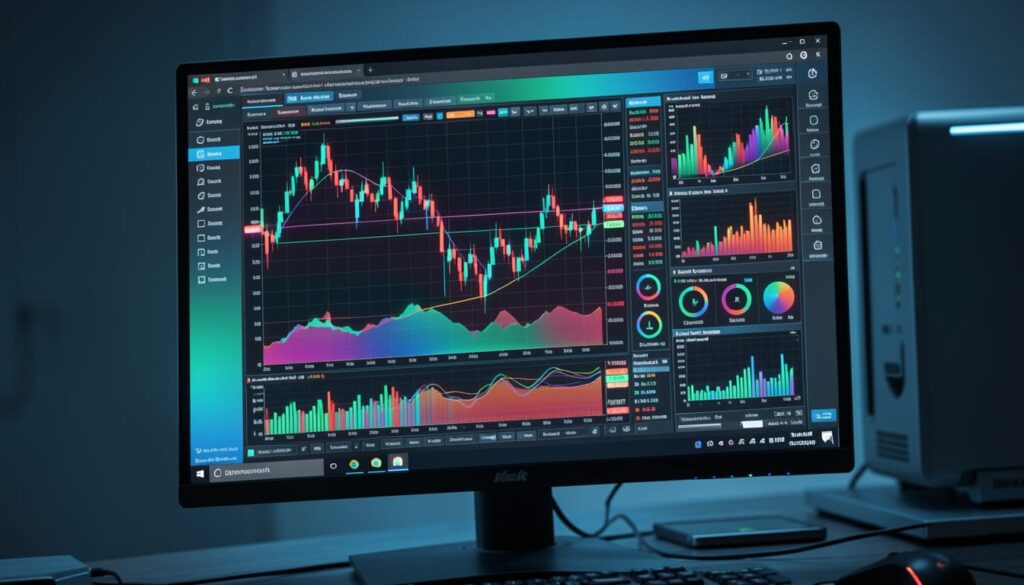
Effective market participation often relies on time-tested techniques for capturing trends. A simulated account provides the ideal environment to refine these methods without financial pressure.
Trend Following Techniques
This approach involves identifying and joining established directional moves. For instance, when Bitcoin futures consistently print higher highs, like at $78,284.00, it signals a strong uptrend.
Key principles for this method include:
- Being highly selective with your entry points to avoid false breakouts.
- Using moving averages on the chart to confirm the trend direction.
- Monitoring assets like Ethereum, priced at $2,308.91, for consistent price level progression.
Momentum Trading Insights
Momentum strategies seek to capitalize on rapid price acceleration. A bullish crossover on indicators, paired with a spike in volume for an asset like Solana, can be a powerful signal.
Successful execution requires discipline:
- Preparing for a quick exit if the price momentum slows.
- Ensuring signals align with the broader market direction.
- Practicing in a demo setting to manage the inherent volatility and risks.
Leveraging Technical Analysis Tools
Many market participants rely on visual and mathematical tools to gauge price action and identify opportunities. These instruments transform raw data into actionable insights. They help remove emotion from the decision-making process.
Utilizing Moving Averages
Moving averages are foundational indicators. They smooth out price data to reveal the underlying trend direction. The two most common types are the Simple Moving Average (SMA) and the Exponential Moving Average (EMA).
Professionals use them to filter out market noise. Key applications include:
- Confirming the primary market bias for a clearer direction.
- Identifying dynamic support and resistance levels on a chart.
- Spotting potential reversal points when shorter and longer averages cross.
Recognizing Chart Patterns
Patterns like triangles and flags form as price consolidates. These shapes reflect periods of balance before a potential breakout. Studying them offers a glimpse into crowd psychology.
Recognizing these formations allows for anticipation of major moves. It provides an edge in timing entry and exit points. Consistent practice with these tools in a simulated environment builds essential intuition.
Successful traders often combine pattern recognition with other indicators. This multi-layered approach increases the probability of a favorable outcome over time.
Risk Management Techniques for Futures Trading
Long-term profitability hinges on a systematic approach to controlling losses. Effective risk management is the cornerstone of success, protecting capital from severe drawdowns.
It involves predefined rules for every position. This discipline allows traders to survive inevitable losing streaks.
Implementing Stop-Loss Orders
These orders are critical for automated exit points. They close a position automatically if the price moves against a predefined level.
This practice defines the maximum loss per trade before entry. Key benefits include:
- Removing emotional decision-making during high volatility.
- Protecting an account from a single catastrophic move.
- Allowing traders to manage risk precisely on every contract.
Managing Leverage Effectively
Leverage allows control of a large market exposure with a small deposit. It is a powerful but dangerous tool.
To manage risk, professionals recommend strict controls:
- Start with smaller contract sizes to limit potential losses.
- Calculate risk-per-trade as a percentage of total account size.
- Use bracket orders that set both profit targets and stop-loss levels.
Understanding that leverage amplifies both gains and losses is vital. A well-defined plan and emotional discipline are required to navigate it safely.
Day Trading Approaches in the Futures Market

Capturing short-term price swings requires a distinct set of tactics and mental fortitude. This activity involves opening and closing a position within the same session. The goal is to profit from small fluctuations.
Scalping Strategies
Scalping aims to secure tiny gains from very brief moves. Positions may last only seconds or minutes. High liquidity is critical for fast order execution.
For example, a scalper might watch BNB contracts priced near $620.63. They look for a rapid breakout from a tight range. The E-mini S&P 500 is another favorite due to its tight spreads.
Intraday Trading Essentials
Successful day trading rests on a clear plan and emotional control. It avoids overnight risk from news gaps. Traders use assets like Polkadot, at $1.21, to identify key support for a potential entry.
Core essentials for intraday work include:
- Focusing on highly liquid contracts for reliable exit points.
- Monitoring order volume to confirm price direction.
- Practicing in a simulated account to master the pace without real financial volatility.
Utilizing Demo Accounts to Hone Your Trading Skills

The true power of a simulated platform lies in its ability to transform theoretical knowledge into practical, executable habits. This focused practice is where real skill is forged.
Building a Realistic Trading Plan
A clear, written plan is the blueprint for success. It removes guesswork and enforces discipline. This document should outline specific rules for every entry and exit.
It must define how to place stop-loss orders and fix the maximum risk per position. This structured approach is vital for navigating volatility.
Learning from Simulated Trades
Reviewing past activity is the fastest way to improve. Traders should keep a detailed journal of their simulated sessions. This log tracks decisions, market conditions, and outcomes.
By analyzing this data over time, people can spot recurring mistakes in their logic. They see which setups work best in different market environments.
Treating the demo with professional rigor builds the confidence needed for live sessions. Consistent review turns practice into lasting proficiency.
Analyzing Market Trends and Volatility
Genuine trends often announce themselves with a surge of activity that breaks through established barriers. Analyzing these market conditions is essential for spotting high-probability opportunities.
Spotting Breakouts
A breakout occurs when price moves decisively above a key resistance level. For example, Shiba Inu (SHIB) futures recently traded at $0.00000636 after such a move.
This signals a potential shift in market direction. Traders watch for these escapes from a price range to plan their next entry.
Monitoring Volume and Volatility
A significant spike in volume often confirms a breakout is real. It shows strong participation and helps avoid false signals.
Volatility provides the necessary price movement for profit. Yet, it also increases the risks of sudden reversals.
By practicing in a demo account, people learn to distinguish genuine trends from temporary noise. Consistent monitoring helps adapt their trading strategies throughout the day.
Integrating Support and Resistance in Trade Setups
Market participants often find that price movements are not random but tend to cluster around specific levels. These areas, known as support and resistance, are where the market has historically paused or reversed. Integrating them into setups is a fundamental skill for improving entry and exit timing.
Identifying Key Levels
Finding these zones involves analyzing historical price data. Traders look for places where buying or selling pressure has consistently emerged. These levels are not fixed forever.
They can shift over time as new information arrives. Constant analysis is needed to track the most relevant support and resistance areas. This helps anticipate where the next major moves might begin.
Applying Chart Patterns
Formations like double tops often appear at these critical levels. They signal potential reversals in direction. Recognizing these patterns on a chart gives traders a clear edge.
It allows them to plan their next move with more confidence. Testing these concepts in a demo account builds practical experience. People learn which support and resistance zones work best for their style.
Adapting Strategies to Different Market Conditions
Historical events like the COVID-19 pandemic reveal how quickly the financial landscape can shift. For long-term survival, participants must treat their methods as flexible systems. This means adjusting parameters and sometimes switching core approaches entirely.
Adjusting for High Volatility
The 2020 equity futures chaos showed how extreme volatility can break a rigid plan. During such periods, normal price noise increases dramatically.
A key adjustment is widening stop-loss orders. This prevents being stopped out by temporary swings. It allows a position room to breathe while still managing risks.
Diversifying Trading Approaches
Different environments demand different tactics. A trending market needs one method, while a range-bound state needs another.
The 2016 Brexit referendum caused wild swings in currency contracts. Traders who combined trend following with mean reversion navigated it better. Testing this blend in a demo account builds vital flexibility.
Traders must recognize when a strategy loses effectiveness. Constant learning and adaptation are the true hallmarks of a professional. They maintain a long-term perspective despite short-term moves.
Learning from Real-World Futures Trading Examples
Real-world case studies offer a transparent look into the disciplined routines of successful market participants. Analyzing these scenarios helps beginners understand the practical application of core principles.
It moves theory into actionable insight. This process is vital for building confidence before using real capital.
Case Studies in Trend Following
Documented examples often highlight a trader‘s patience. They show the ability to hold a position through minor pullbacks.
A key lesson is cutting losses quickly while letting winning trades run. This discipline protects capital during uncertain market moves.
- Identifying a genuine trend using chart tools and volume.
- Waiting for a clear breakout from a consolidation range.
- Managing risks with stops while the market confirms the direction.
Successful Day Trading Scenarios
These scenarios frequently involve traders who stick to a predefined strategy. They avoid emotional decisions during the day.
Consistency comes from strict rules for every entry and exit. This approach manages the inherent volatility of short-term contracts.
Common traits include meticulous planning and reviewing past trades. They focus on high-probability setups near key support or resistance levels. This method builds the momentum needed for long-term success.
Essential Trading Tools and Platforms
Choosing the proper analytical suite is a decisive step for any serious market participant. The right software provides a clearer view of price action and helps manage inherent risks. It turns complex data into actionable insights.
These tools are vital for executing a plan with precision. They help identify high-probability setups and improve timing for entry and exit points. A good platform is the foundation for consistent results.
Exploring Bookmap and Other Tools
Specialized platforms like Bookmap offer a unique visual edge. They display live order flow and liquidity as a heatmap on the chart. This lets traders see where large buy or sell orders cluster in real-time.
Exploring different software is important. Each one has unique features for analyzing the market. Key benefits include:
- Visualizing the depth of the market beyond the price range.
- Spotting potential breakout zones before major moves.
- Improving execution speed for fast-moving contracts.
Using Technical Indicators Effectively
Indicators like RSI and MACD help confirm the trend direction and spot reversals. They add a layer of objectivity to analysis. Using them well requires understanding what each one measures.
Avoid “analysis paralysis” by not overloading your screen. Combine a few reliable tools for a comprehensive view. Effective practices for traders include:
- Using RSI to gauge momentum near support or resistance.
- Watching MACD crossovers to confirm a strategy signal.
- Checking volume to validate price action during high volatility.
Practice with these tools in a demo account to find what fits your style. Continuous learning about new technologies keeps you competitive.
Final Thoughts on Enhancing Your Trading Journey
The path to proficiency in financial markets is paved with dedicated practice and a willingness to learn from every experience.
Enhancing your journey requires a commitment to continuous learning. The best methods align with your personal risk tolerance and financial objectives.
Focus on mastering the art of entries and exits to improve performance. Always prioritize risk management to protect your capital from severe drawdowns.
A demo account allows you to practice these concepts safely. It prepares you for the realities of live sessions without real financial pressure.
As you progress, continue to refine your approach. Seek out new tools that can help you gain a competitive edge.
Success is a marathon, not a sprint. Those who remain patient and disciplined are the most likely to succeed over the long term.