
The world of futures offers a dynamic landscape for traders. Since the establishment of the Chicago Board of Trade in 1848, this market has evolved significantly. Today, it provides unparalleled access, allowing participants to engage 24 hours a day, five days a week.
For those new to this environment, understanding the mechanics is crucial. Demo accounts play a vital role in this learning process. They allow users to practice with real market data, building confidence without the risk of losing actual capital. This practice is essential for developing the skills needed to navigate complex market conditions.
The Optimus Futures Learn Center stands out as a valuable resource. With over 50 lessons available, it guides individuals through the foundational concepts necessary for successful trading. By mastering these principles, new traders can prepare themselves for the challenges of the market.
Understanding Futures Trading
Understanding the mechanics of futures contracts is essential for any aspiring trader. These contracts are standardized agreements that allow participants to buy or sell an asset at a predetermined price on a specific future date. This feature provides a clear framework for both buyers and sellers, ensuring transparency in transactions.
The Commodity Futures Trading Commission (CFTC) plays a vital role in regulating these markets. This independent U.S. agency ensures the integrity of futures and options markets, protecting all investors involved. Such oversight fosters trust and stability within the trading environment.
Historically, the concept of futures contracts dates back to the early 1700s in Japan’s rice markets. These early agreements helped manage supply risks, showcasing the long-standing significance of contracts in commerce.
- Every futures contract includes essential details such as the grade of the asset, quantity, tick size, and expiration date.
- Understanding these specifications is critical for any trader aiming to navigate the global futures markets effectively.
- Each contract is designed to standardize trading, making it easier for participants to engage with the markets.
The Role of Demo Accounts in Trading Education
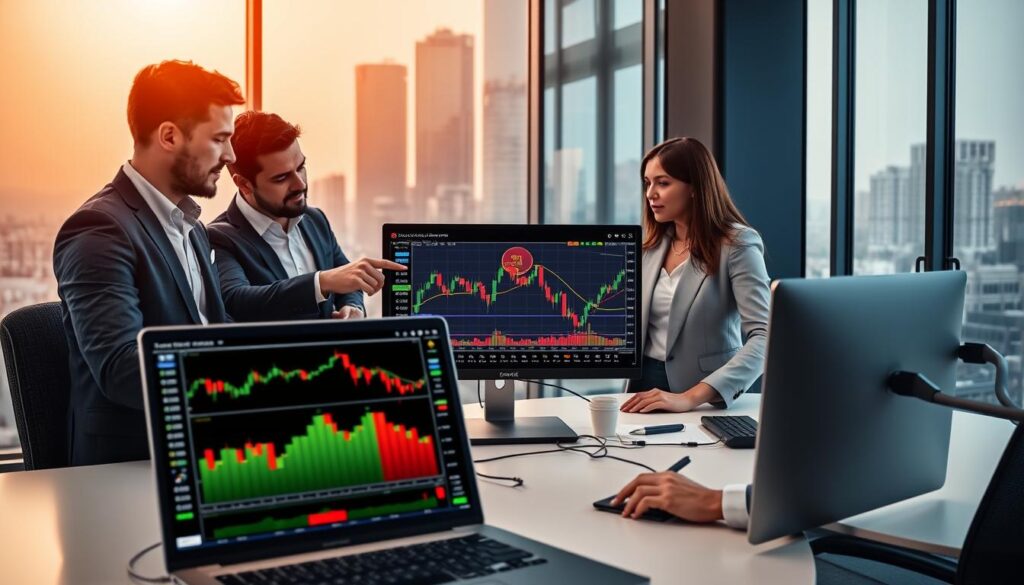
Simulated trading environments empower traders to refine their skills without financial risk. These accounts allow users to test execution mechanics and strategy logic using real-time market data. This hands-on approach is vital for anyone looking to gain confidence in their trading abilities.
The CME Institute offers free online courses and tools that help individuals practice trades in a controlled setting. This educational environment fosters a deeper understanding of market dynamics.
Experts recommend executing at least 20 simulated trades. This milestone ensures that new traders fully grasp the mechanics of order entry and management.
- Simulated trading provides a vital environment for testing strategy logic.
- Building confidence through a demo account helps reduce psychological stress.
- Practicing in a risk-free environment allows traders to see how decisions affect their account balance.
Mastering Futures Trading Education: Core Principles

A comprehensive grasp of core principles is vital for anyone aspiring to excel in the futures markets. Successful participants understand contract mechanics, risk management, and execution strategies. This knowledge helps avoid common pitfalls that can derail their trading efforts.
The Institute for Financial Markets offers a collection of free videos and instructor-led courses. These resources are designed to help traders build a strong foundation. By engaging with these materials, investors can learn how global markets function daily.
A structured education path is essential for those transitioning from beginner to professional levels. Mastering the core principles of futures trading requires a disciplined approach.
- Traders should invest time studying supply, demand, and price movement patterns.
- Continuous learning and rigorous self-assessment are crucial for developing a professional mindset.
- Understanding advanced execution strategies is key for all investors aiming for success.
Navigating Market Mechanics and Order Types

Understanding various order types is crucial for effective market participation. Each order type serves a specific purpose and can significantly influence trading outcomes. Traders must familiarize themselves with these orders to enhance their strategies and manage risks effectively.
Market orders are designed for immediate execution. However, they can carry risks regarding slippage, especially during high volatility. On the other hand, limit orders provide traders with price control, ensuring they do not pay more than their intended target.
Advanced strategies, such as bracket orders, allow traders to set both profit targets and stop-losses simultaneously. This approach is essential for professional trade management. Additionally, stop orders instruct brokers to activate a trade when a specific price level is reached, serving as a critical tool for risk management.
- Market orders ensure quick execution but may incur slippage.
- Limit orders help control entry and exit prices.
- Bracket orders manage positions with automated profit and loss settings.
- Stop orders are vital for triggering trades at predetermined price levels.
- Understanding these order types is fundamental for precise trading.
Leveraging Demo Accounts for Effective Risk Management

Managing risk effectively is a cornerstone of successful trading. In the world of futures, understanding margin is crucial. Margin acts as a performance bond, ensuring both parties can fulfill their contract obligations.
Traders need to monitor their account equity closely. If it falls below the required margin level, a margin call may occur, requiring an immediate deposit of funds.
Utilizing a demo account provides a safe space to experience the effects of margin requirements on position size without risking real capital. This practice is essential for developing strong risk management skills.
- Effective risk management begins with recognizing that margin is not a loan.
- Traders must keep a close eye on their account equity to avoid margin calls.
- Setting strict limits on capital exposure during volatile conditions is vital.
- Simulating the margin call process teaches the importance of maintaining sufficient funds.
Exploring Diverse Futures Markets
Diverse markets present unique opportunities for traders seeking to expand their portfolios. Understanding the various types of futures can help traders make informed decisions and develop effective strategies.
One key area is commodity futures. These contracts, such as those for natural gas and corn, are vital for producers. They allow these producers to hedge against price fluctuations in the physical market, ensuring stability in their operations.
Another significant category is equity index futures, like the S&P 500. These contracts provide traders with broad exposure to the market, making them an efficient tool for speculation. For example, the Micro E-mini S&P 500 (/MES) contract controls $34,000 in exposure but requires only a $50 margin.
- Commodity futures are essential tools for producers to manage price volatility.
- The Micro E-mini S&P 500 is popular for its high capital efficiency.
- Equity index futures allow speculation on market direction with liquidity.
- Understanding different futures markets is vital for a diversified strategy.
- Traders analyze the S&P 500 index to gauge market sentiment.
Learning Effective Risk Management Strategies

Mastering risk management strategies is essential for traders looking to protect their investments. A fundamental principle is the 1-2% rule, which limits the amount of capital risked on any single trade. This approach helps traders maintain their capital over time.
Additionally, utilizing volatility-based stops, such as the Average True Range (ATR), allows traders to set stop-loss levels based on current market conditions. This flexibility is crucial in adapting to market fluctuations.
- Implementing the 1-2% rule helps traders preserve their capital by limiting exposure on every trade.
- Using volatility-based stops allows traders to adjust their risk management based on the current market environment.
- Professional traders emphasize that discipline in following risk management rules is what separates successful participants from those who lose their accounts.
- A comprehensive risk management plan should include daily loss limits and clear position sizing rules to protect the trader’s overall financial health.
- Learning to manage risk effectively is a continuous process that requires constant monitoring of both the market and the trader’s own performance.
Strategies for Technical and Fundamental Analysis

Mastering both technical and fundamental analysis is crucial for successful market navigation. These strategies provide traders with the insights needed to make informed decisions. Technical analysis focuses on price charts and indicators, while fundamental analysis evaluates economic data and supply-demand factors.
Understanding these methods can enhance a trader’s ability to identify opportunities in the market. For instance, order flow analysis allows traders to read bid/ask imbalances, helping them spot institutional activity before price movements occur.
- Technical analysis relies on price charts to pinpoint entry and exit points.
- Fundamental analysis evaluates economic indicators to assess an asset’s long-term value.
- Order flow analysis helps identify market depth and institutional trading patterns.
- Combining both analyses offers a holistic view of market dynamics.
- Traders proficient in these techniques are better equipped to navigate complexities.
Using Demo Accounts to Test Trading Strategies
Using demo accounts allows traders to refine their strategies without financial risk. This practice is essential for validating a strategy’s logic. By doing so, traders can ensure that their approach has a statistical edge before using it in live scenarios.
Simulated environments provide real-time market data, enabling traders to observe how their strategies perform during high-impact economic news releases. This experience is invaluable for understanding market dynamics.
- Testing a trading strategy in a demo account is a critical step to ensure the logic holds up under real-time market conditions.
- Traders should use simulated environments to validate their strategies, confirming that their approach has a genuine edge before risking real capital.
- By simulating real market conditions, individuals can observe how their chosen strategies perform during periods of high volatility and news events.
- A well-tested strategy provides the confidence needed to execute trades decisively when transitioning from a demo account to a live environment.
- Continuous refinement of trading strategies based on simulated results is a hallmark of professional traders who aim for long-term market success.
Understanding Margin, Leverage, and Capital Management
Understanding how margin and leverage function can significantly impact trading outcomes. In the realm of futures, leverage amplifies both gains and losses. This makes it a powerful tool, but it also introduces high risks for all investors.
Margin acts as a performance bond, ensuring that both parties can fulfill their obligations. Initial margin requirements are set by exchanges and can fluctuate based on market volatility. Traders must maintain sufficient account equity to avoid potential pitfalls.
- Leverage allows investors to control large positions with a small amount of capital.
- Effective capital management ensures traders have enough funds to cover potential losses.
- Exchanges may adjust margin requirements during high volatility to protect market integrity.
- Investors should recognize that while leverage can enhance returns, it also increases the risk of losing more than the initial investment.
Trading Platforms and Tools for Futures
Selecting the right platform is crucial for effective market engagement. Professional platforms like TradingView, Sierra Chart, and Optimus Flow offer diverse tools for both demo and live environments. Each platform comes with unique features that can enhance a trader’s experience.
It’s essential to integrate real-time data into any trading platform. This integration is necessary for accurate order execution and effective analysis of the current market. Without real-time data, traders may miss critical opportunities.
When considering a platform, here are some key points to keep in mind:
- Choosing the right trading platform is a key decision, with options like TradingView, Sierra Chart, and Optimus Flow offering professional-grade tools.
- Platforms must be capable of integrating real-time data to ensure that traders can make decisions based on the most current market information.
- Many brokers provide access to multiple platforms, allowing traders to select the software that best fits their specific style and technical needs.
- A high-quality platform should offer robust order entry features, including the ability to place complex bracket orders with minimal latency.
- Before committing to a platform, traders should use a demo account to test the interface and ensure it supports their preferred trading strategies.
Real Case Examples and Demo Trading Simulations
Real-world examples in demo trading can significantly enhance a trader’s understanding of market dynamics. These simulations provide a practical way to apply theoretical knowledge and observe outcomes in real-time.
Micro E-mini S&P 500 Demo Experience
In a practical simulation, a trader might buy one Micro E-mini S&P 500 contract at 5,000 points, representing a notional value of $25,000. Each point in this contract is worth $5. Therefore, a 50-point move in the index results in a $250 profit or loss.
Simulations with Diverse Contract Types
Simulations with diverse contract types allow traders to understand how different assets behave in various market conditions. By tracking the performance of a single position in a demo account, traders learn to calculate their potential gains and losses accurately.
- Real case examples help bridge the gap between theoretical knowledge and practical application.
- Simulated trading experiences prepare traders for real market scenarios.
- Understanding the dynamics of the S&P 500 enhances overall trading strategies.
Educational Resources and Industry Insights
Exploring educational avenues can significantly boost a trader’s confidence and skill set. Many platforms offer valuable resources tailored for both beginners and experienced traders.
For instance, the CBOE Options Institute provides specialized courses that help traders understand complex options trading strategies within the broader derivatives market. Similarly, the Intercontinental Exchange offers both in-person and online training programs covering a wide range of topics related to global derivatives markets.
Moreover, many reputable brokers provide extensive educational support, including webinars and tutorials, to help their clients succeed in the industry. The Options Industry Council is a valuable resource that hosts free webinars and produces educational videos for traders at every experience level.
- Utilizing resources from established institutions and trusted brokerage firms is a safe way to learn about the markets while avoiding potential scams.
- Courses and webinars can provide insights into effective trading strategies and market analysis.
- Accessing these educational tools can enhance a trader’s ability to navigate the complexities of the markets.
Wrapping Up Key Lessons and Next Steps
To excel in the derivatives arena, one must embrace lifelong learning and maintain a disciplined approach. Mastering these markets requires a commitment to continuous education and effective risk management. Traders should leverage the 24/5 opportunities in markets, from currencies and metals to the S&P 500 index, to build a diverse portfolio.
It’s crucial to remember that contracts involve significant risks. Maintaining proper margin levels is essential for protecting your trading account capital. Before moving to live trades, ensure you have fully tested your order entry and management techniques using a reliable demo platform.
By focusing on the basics of contract expiration and tick values, you can navigate the complexities of global exchanges with greater confidence. Stay disciplined, keep your analysis objective, and always prioritize the preservation of your capital as you pursue your long-term trading goals.