Entering the world of futures can feel overwhelming. The fast-paced market moves quickly, and real money is on the line. This is where a powerful learning tool comes into play.
A demo account provides a virtual sandbox. It simulates real market conditions without any financial risk. Users get hands-on experience with price movements and trade execution.
This type of platform is vital for newcomers. It is also useful for seasoned traders testing new strategies. Everyone can practice and learn from mistakes safely.
This guide will explore how to use these accounts effectively. It covers setup, platform features, and the path to live trading. Building confidence is the first step toward success in futures markets.
If you’re new to simulated trading, we recommend starting with our complete guide on futures paper trading guide, where we explain everything step by step.
Introduction to Futures Trading and Demo Accounts
Futures contracts represent one of the most dynamic instruments in modern financial markets. This section establishes the fundamental knowledge needed to navigate these complex derivatives successfully.
Understanding the Basics of Futures Trading
These standardized agreements allow participants to buy or sell specific assets at predetermined future dates. The contracts cover diverse asset classes including commodities, currencies, and stock indices.
Leverage plays a crucial role in these transactions. It amplifies both potential gains and losses, making proper education essential before committing real capital.
The Role of Demo Accounts in Building Trading Confidence
Paper trading provides a virtual environment where individuals can practice without financial consequences. This simulated approach functions as a safe sandbox for skill development.
Confidence grows through repeated practice in this risk-free setting. Traders learn to manage emotions and execute strategies without pressure.
The transition to live markets becomes smoother when approaches are thoroughly tested. Understanding fundamentals combined with hands-on experience creates a solid foundation for long-term success.
Setting Up a Demo Account for Futures Trading
Taking the first practical step in futures education involves setting up a virtual practice environment. This process is designed to be quick and user-friendly. Individuals can begin their journey in minutes.
How to Get Started on the Platform
Registration typically requires basic personal information. There is no financial commitment or credit card needed. Full platform functionality is granted immediately upon signup.
Most providers offer a substantial amount of virtual funds. This allows for realistic practice with position sizing. Live market data feeds create an authentic experience.
Benefits of Simulated Trading for Strategy Testing
This risk-free sandbox is ideal for experimenting with different approaches. Traders can test technical indicators and entry-exit strategies. There is no emotional pressure from real financial stakes.
Iterative learning becomes possible. Performance can be analyzed, and mistakes identified. This refines techniques before using actual capital.
The skills developed here translate directly to live markets. Thorough testing builds significant confidence. It complements theoretical knowledge with essential hands-on experience.
Exploring Trading Platforms and Tools
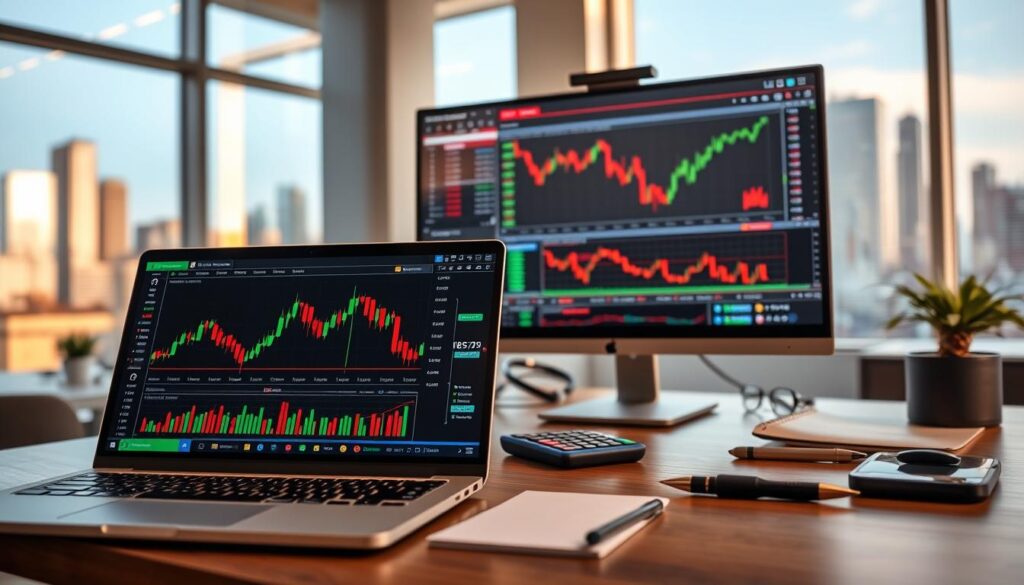
Modern trading platforms offer a comprehensive suite of tools that transform market data into actionable insights. These integrated systems provide a unified environment for analysis and execution.
They streamline the entire process from research to order placement. This creates an efficient workflow for monitoring positions and market activity.
Overview of Integrated Tools and Real-Time Market Data
Access to live price streams and volume information is crucial. This real-time data creates authentic conditions for practice and strategy testing.
Platforms feature tools like Click N’ Trade for rapid order execution. Alerts based on price, study, or time parameters help traders stay informed.
Options calculators and ‘what if’ scenarios allow for thorough planning. These features help evaluate potential outcomes before committing to a trade.
Managing Orders, Charts, and Market Information
Advanced order management includes Click N’ Drag functionality. This allows for quick order modifications without manual typing.
OCO orders with GTC capability provide flexible trade management. Comprehensive charting tools include major studies like moving averages and RSI.
The DOM Trader displays real-time bid and ask prices. Web-based platforms ensure compatibility across various devices and operating systems.
These integrated tools help identify active markets and analyze trends. They make the analysis process quicker and more effective for informed decision-making.
Educational Resources and Real-Time Trading Insights
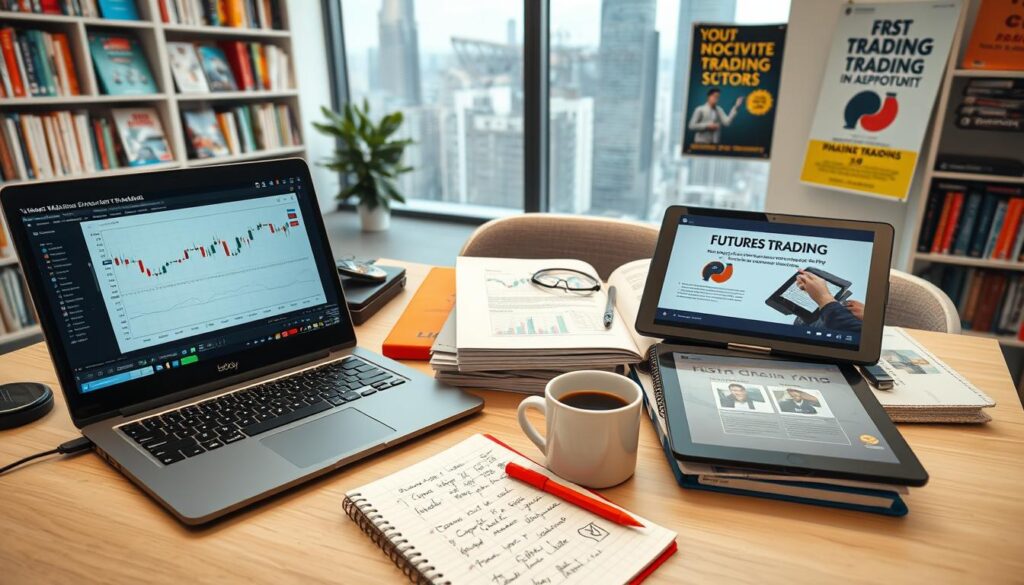
The true value of simulated trading extends beyond practice to include structured learning pathways and expert guidance. These comprehensive resources transform the virtual environment into a complete educational ecosystem.
Access to rich libraries of tutorials and interactive materials accelerates the learning curve for all participants. Both newcomers and seasoned professionals benefit from this structured approach to skill development.
Interactive Learning Materials and Webinars
Live training sessions and webinars provide real-time insights from market experts. Professionals share proven strategies and analysis techniques during these interactive events.
This combination of hands-on practice with expert instruction creates a powerful learning experience. Theoretical concepts can be immediately applied in the risk-free environment.
Dedicated customer support teams enhance this educational journey. They assist with technical questions and provide valuable trading insights when needed.
The systematic approach to education builds significant confidence among participants. Complex market dynamics become more accessible through well-structured learning materials.
Ongoing access to these resources ensures continuous improvement of trading strategies. This comprehensive support system prepares individuals for successful market participation.
Empowering Your Trading Journey Forward
The shift from simulated environments to actual capital deployment represents a significant milestone. This transition requires both technical preparation and emotional readiness for the realities of live markets.
While paper trading builds essential skills, real money introduces psychological factors that virtual funds cannot replicate. Emotional responses to risk become tangible when personal capital is involved. Many platforms facilitate this progression with streamlined processes and supportive incentives.
Ongoing use of simulated practice remains valuable even after beginning live execution. It provides a safe space to test new approaches without financial exposure. The discipline developed during this learning phase creates a strong foundation for long-term success.
This journey from practice to performance demands patience and consistent risk management. Starting with conservative position sizes allows for gradual acclimation to market dynamics. The confidence gained through thorough preparation becomes the trader’s most valuable asset.
To get started right away, visit our homepage dedicated to future demo and explore the best options available.
Read Also